




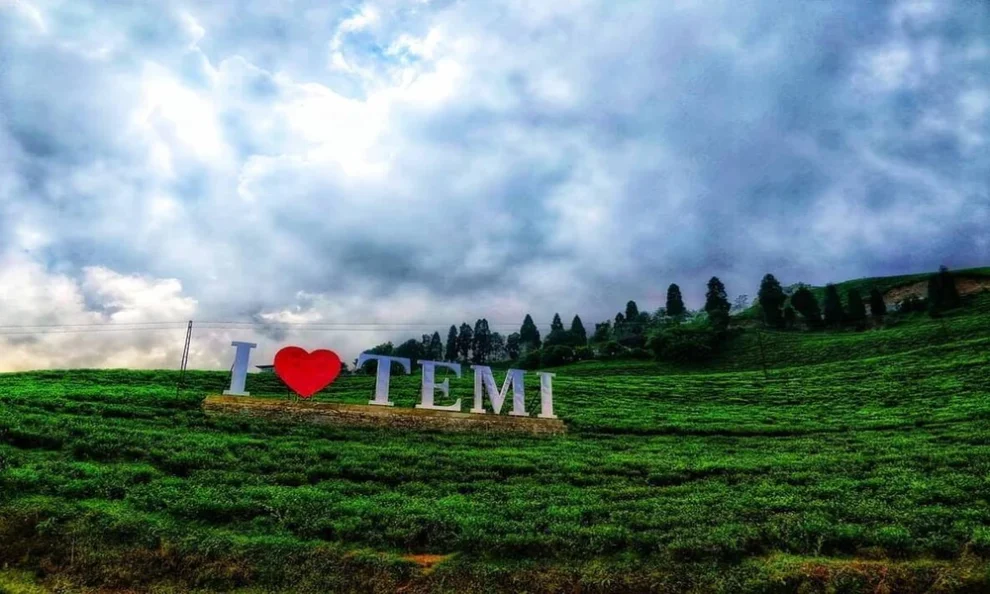

The first time I drove into Temi, I nearly missed the turn. The road down from Ravangla winds through pine and cardamom, and then the hillside just opens up into rows of tea bushes running down the slope like green corduroy. That is Temi Tea Garden, the only working tea estate in all of Sikkim, and after four visits across different seasons I still rate it as one of the most underrated stops in the south of the state.
Most people give Sikkim’s south a single rushed day. They tick off Namchi and Ravangla, take one photo of the tea rows from the road, and move on. I think that is a mistake. Temi rewards a slow morning, and if you can spare it, a night on the estate itself. Here is how to plan a visit to Temi Tea Garden properly, with real timings, costs, seasons, and the small things nobody tells you.
A short history of the only tea garden in Sikkim
Temi was planted in 1969, set up by the Chogyal, Sikkim’s king at the time, to give work to Tibetan refugees who had crossed over after the unrest in Tibet. The first saplings came over the hills from Darjeeling. More than fifty years on, the estate covers around 440 acres on the lower slopes of Tendong Hill, between roughly 1,200 and 1,800 metres.
Today it produces about 100 metric tons of tea a year, all of it organic. Sikkim was declared India’s first fully organic state in 2016, and Temi fits that story: no chemical fertiliser, no pesticide. The tea sells under the plain name Temi Tea, and it has won quality awards at Indian auctions over the years. If you have had a good cup of Sikkim tea, it came from here. There is nowhere else.
Best time to visit Temi Tea Garden
Two windows stand out, and they give you very different days.
Spring, from mid-March to May, is when the first flush comes in. The bushes go bright green, the pluckers are out on the slopes with baskets on their backs, and the weather is mild without the harsh midday sun. This is the classic time to see the garden actually working.
Autumn, October into November, is my quiet favourite. The air is at its clearest, so Kanchenjunga stands sharp on the horizon behind the rows, and the wild Himalayan cherry trees around the estate flush pink. The light in the first hour after sunrise here is worth setting an alarm for.
Skip the monsoon, June to September. The Ravangla road is prone to landslides then, and the whole slope sits under cloud. Deep winter, December to February, is cold and often misty, the bushes are dormant, but you will have the place almost to yourself if solitude is what you are after.
How to reach Temi Tea Garden
Temi is in South Sikkim, and getting there is half the pleasure.
The nearest big transport points are New Jalpaiguri railway station (NJP) and Bagdogra airport, both near Siliguri, roughly 100 km away, which is a four to five hour drive. From Gangtok it is about 55 km, or two and a half hours on mountain roads. From Namchi the garden is only around 29 km, about 45 minutes, and from Ravangla it is close, about 20 km, an hour at most.
The easiest approach is a shared jeep to Namchi or Ravangla, then a local cab out to Temi. If you are driving your own route, the descent from Ravangla is the prettier one.
On permits: South Sikkim is not a restricted area, so Indian travellers need no special permit for Temi. Foreign nationals do need an Inner Line Permit for Sikkim, which is simple to get online or at the Rangpo checkpost, but Temi itself sits in no protected zone, so there is no extra paperwork.
Timings, entry, and what you can actually do
The estate road is generally open for walking from about 8 am to 5 pm. Entry has been inconsistent in my experience. On one visit I paid a small fee at the gate, on another nothing at all, so carry a little cash and do not be thrown either way. As of early 2026, any charge was around 100 rupees or less.
What you come for is the walk. The path runs down through the bushes, and on a misty morning it feels a world away from the tourist circuit up north. The processing factory can sometimes be visited if you ask, and it is best arranged ahead through your stay rather than turning up cold, especially during plucking season when everyone is busy. There is no polished tasting room like you might find at a big commercial estate, so my advice is simple: buy a packet or two of Temi Tea at source and brew it properly once you get home.
Where to stay on the estate
The standout option is Cherry Resort, run by the state tea board and sitting right inside the garden. Rooms run from roughly 2,700 to 6,800 rupees depending on the plan and season, and the better ones look out over the Teesta valley toward Kanchenjunga. It is small, so book well ahead. For something older and cheaper, the colonial-era Temi Dak Bungalow takes overnight guests at around 1,500 rupees a night, with wooden floors, a working fireplace, and real heritage feel. If both are full, base yourself in Ravangla or Namchi and come out for the morning.
What surprised me, and what to skip
- The best photograph is not the bushes head on. It is the single road curving through them, shot low in the first light with mist still sitting in the folds of the hill.
- Do not arrive expecting a Darjeeling-style tea tourism circuit with cafes and gift shops. Temi is low-key and a little rough at the edges, and that is exactly why it is worth the detour.
- Pair it with the region. Ravangla’s Buddha Park and the Ralang monastery are close, and Namchi’s Char Dham complex is an easy add-on, so Temi slots neatly into a two-day loop of the south rather than a rushed single stop.
Temi Tea Garden FAQ
Is Temi Tea Garden worth visiting?
Yes, if you slow down for it. As a five-minute photo stop it underwhelms. Given a morning walk and a night on the estate, it is one of South Sikkim’s best.
What is the entry fee for Temi Tea Garden?
Any charge is small, around 100 rupees or less, and I have been waved through free more than once. Carry cash for the gate. This was the case as of early 2026.
What is the best time to visit Temi Tea Garden?
Mid-March to May for the first flush and green slopes, or October to November for clear Kanchenjunga views and the pink cherry bloom.
Can you buy Temi Tea at the garden?
Usually yes. Packets of the organic loose leaf are sold at source and make the best souvenir from the trip.
How far is Temi Tea Garden from Gangtok?
About 55 km, roughly two and a half hours by road.
Working out permits, seasons, and the drive up from NJP takes a bit of planning, and a local team saves you the guesswork. There is more on planning a South Sikkim trip over at sikkimtourism.org, a Sikkim-based outfit who actually know these roads, stays, and seasons first hand.





Add Comment